---
title: ERP for Manufacturing in Mexico with Real Control
description: Un ERP para manufactura México conecta planta, inventario, costes y finanzas para decidir con datos, cumplir y crecer sin añadir más hojas de cálculo.
image: https://afocirmbqdxnkyescnev.supabase.co/storage/v1/object/public/featured-images/c0a40da1-8da0-46da-9388-a69ce81712f8/workflows/72d539c5-af7f-4d25-b015-4a8ac4ebf7ff.webp
---
English
- English
- [Español](https://www.efficientix.com/es/blog/erp-para-manufactura-mexico)
Send us a Message: [+1 786 546 6255](https://wa.me/17865466255)
Más resultados
[Access NetSuite](https://system.netsuite.com/pages/customerlogin.jsp?country=MX) [Contact Us](https://www.efficientix.com/en/contact?hsLang=en) [Access Support](https://www.efficientix.com/en/efficientix-technical-support?hsLang=en)
[](https://www.efficientix.com/?hsLang=en)
[](https://www.efficientix.com/?hsLang=en)
- [Home](https://www.efficientix.com/en/)
- NetSuite
- [NetSuite ERP](https://www.efficientix.com/en/netsuite-erp)
- [NetSuite EPM](https://www.efficientix.com/en/epm-netsuite)
- [NetSuite NSAW](https://www.efficientix.com/en/netsuite-nsaw)
- Partnerships
- [Integrations](https://www.efficientix.com/en/celigo-netsuite-integrator)
- [Point Of Sale](https://www.efficientix.com/en/zoku-pos-netsuite)
- [E-Commerce](https://www.efficientix.com/en/shopify-netsuite)
- [Manteinance Management](https://www.efficientix.com/en/shepherd-netsuite)
- [Human Resources](https://www.efficientix.com/en/software-rrhh)
- [Efficientix +](https://www.efficientix.com/apps-efficientix-for-netsuite)
- [Mexican Tax Localization](https://www.efficientix.com/en/netsuite-mexico-localization)
- [Mobile Sales App](https://www.efficientix.com/en/mobile-sales-app)
- [Expense Management App](https://www.efficientix.com/en/expense-management-app-netsuite)
- [Tax Suite](https://www.efficientix.com/en/tax-suite-netsuite)
- [Ask NetSuite](https://www.efficientix.com/en/ask-netsuite-ai-assistant)
- [POS](https://www.efficientix.com/en/point-of-sale-pos-netsuite)
- Industries
- [Financial Services](https://www.efficientix.com/en/erp-fintech)
- [Food & Beverage](https://www.efficientix.com/en/erp-food-beverage)
- [Livestock](https://www.efficientix.com/en/livestock-for-netsuite)
- [Manufacturing](https://www.efficientix.com/en/erp-manufacturing)
- [Pharmaceutical Distributor](https://www.efficientix.com/en/erp-medical-distributors)
- [Professional Services](https://www.efficientix.com/en/erp-professional-services)
- [Renewable Energy](https://www.efficientix.com/en/erp-renewable-energy)
- [Retail](https://www.efficientix.com/en/erp-retail)
- [StartUps](https://www.efficientix.com/en/erp-startups)
- [Transportation](https://www.efficientix.com/en/erp-transportation-mexico)
- [Telecommunications](https://www.efficientix.com/en/erp-for-telecommunications)
- [Wholesale](https://www.efficientix.com/en/erp-wholesale)
- Resources
- [Blog](https://www.efficientix.com/en/blog)
- [Success Stories](https://www.efficientix.com/en/success-stories)
- [EFX Learning](https://www.efficientix.com/en/efx-learning)
- About Us
- [Efficientix Services](https://www.efficientix.com/en/services-netsuite)
- [Efficientix Support](https://www.efficientix.com/en/support-netsuite)
- [About Efficientix](https://www.efficientix.com/en/about-us)
- [Contact](https://www.efficientix.com/en/contact)
En
- English
- [Español](https://www.efficientix.com/es/blog/erp-para-manufactura-mexico)
More results
- [Home](https://www.efficientix.com/en/)
- NetSuite
- [NetSuite ERP](https://www.efficientix.com/en/netsuite-erp)
- [NetSuite EPM](https://www.efficientix.com/en/epm-netsuite)
- [NetSuite NSAW](https://www.efficientix.com/en/netsuite-nsaw)
- Partnerships
- [Integrations](https://www.efficientix.com/en/celigo-netsuite-integrator)
- [Point Of Sale](https://www.efficientix.com/en/zoku-pos-netsuite)
- [E-Commerce](https://www.efficientix.com/en/shopify-netsuite)
- [Manteinance Management](https://www.efficientix.com/en/shepherd-netsuite)
- [Human Resources](https://www.efficientix.com/en/software-rrhh)
- [Efficientix +](https://www.efficientix.com/apps-efficientix-for-netsuite)
- [Mexican Tax Localization](https://www.efficientix.com/en/netsuite-mexico-localization)
- [Mobile Sales App](https://www.efficientix.com/en/mobile-sales-app)
- [Expense Management App](https://www.efficientix.com/en/expense-management-app-netsuite)
- [Tax Suite](https://www.efficientix.com/en/tax-suite-netsuite)
- [Ask NetSuite](https://www.efficientix.com/en/ask-netsuite-ai-assistant)
- [POS](https://www.efficientix.com/en/point-of-sale-pos-netsuite)
- Industries
- [Financial Services](https://www.efficientix.com/en/erp-fintech)
- [Food & Beverage](https://www.efficientix.com/en/erp-food-beverage)
- [Livestock](https://www.efficientix.com/en/livestock-for-netsuite)
- [Manufacturing](https://www.efficientix.com/en/erp-manufacturing)
- [Pharmaceutical Distributor](https://www.efficientix.com/en/erp-medical-distributors)
- [Professional Services](https://www.efficientix.com/en/erp-professional-services)
- [Renewable Energy](https://www.efficientix.com/en/erp-renewable-energy)
- [Retail](https://www.efficientix.com/en/erp-retail)
- [StartUps](https://www.efficientix.com/en/erp-startups)
- [Transportation](https://www.efficientix.com/en/erp-transportation-mexico)
- [Telecommunications](https://www.efficientix.com/en/erp-for-telecommunications)
- [Wholesale](https://www.efficientix.com/en/erp-wholesale)
- Resources
- [Blog](https://www.efficientix.com/en/blog)
- [Success Stories](https://www.efficientix.com/en/success-stories)
- [EFX Learning](https://www.efficientix.com/en/efx-learning)
- About Us
- [Efficientix Services](https://www.efficientix.com/en/services-netsuite)
- [Efficientix Support](https://www.efficientix.com/en/support-netsuite)
- [About Efficientix](https://www.efficientix.com/en/about-us)
- [Contact](https://www.efficientix.com/en/contact)
[Access NetSuite](https://system.netsuite.com/pages/customerlogin.jsp?country=MX)[Contact Us](https://www.efficientix.com/en/contact?hsLang=en)
Contáctanos: **[+52 55 8041 6312](https://wa.me/525580416312)**
Correo:[**info@efficientix.com**](mailto:info@efficientix.com)
# ERP for Manufacturing in Mexico with Real Control
By [**Christian Salas**](https://www.efficientix.com/en/blog/author/christian-salas) on Sep 3, 2026, 8:45:18 AM
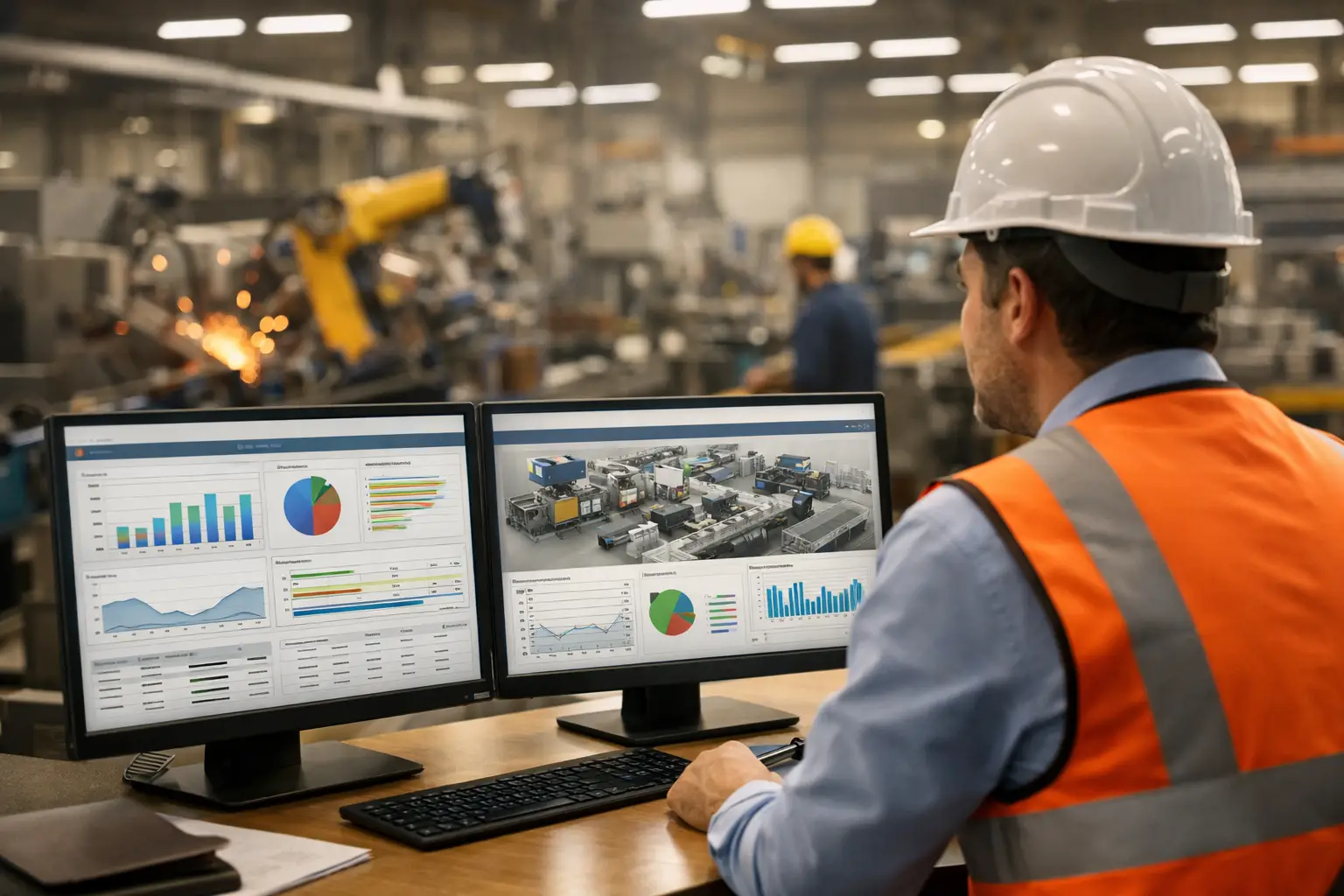
When the plant grows, the problem is rarely producing more. The problem is that procurement, warehouse, production, quality, and finance stop working with the same information. An order gets updated in Excel, inventory is corrected at the end of the shift, and the actual cost shows up after the month has already closed. An **ERP for manufacturing in Mexico** must solve that disconnect without ignoring the fiscal, operational, and multinational reality of each company.
For a mid-sized manufacturer, the ERP isn't just an administrative system. It's the foundation for knowing what to produce, with what materials, at what cost, for which customer, and at what margin. If that data arrives late or is inconsistent, leadership makes decisions based on estimates instead of operational control.
## What an ERP for Manufacturing in Mexico Must Solve
An ERP implementation makes sense when it eliminates friction between departments and converts operational transactions into reliable financial information. In manufacturing, this means connecting demand, procurement, production, inventory, costs, and billing on a single platform.
The first front is materials planning. With bills of materials, manufacturing routes, and updated inventory levels, the team can identify shortages before committing to a delivery date. It's not about keeping more inventory as a precaution, but about keeping the right inventory in the right warehouse at the right time.
The second front is production control. Work orders must reflect actual consumption, progress, scrap, rework, and finished goods. When this information is captured after the fact, standard costing may be useful for budgeting, but it stops explaining what actually happened on the shop floor. A well-configured ERP allows analyzing variances between planned and actual by order, line, product family, or work center.
The third front is financial. Purchases, material receipts, production, shipments, and billing must impact accounting with clear rules. For a CFO or controller, this reduces manual reconciliations and enables a faster accounting close. For operations, it prevents the team from wasting time defending different figures against finance.
## The Visibility That Changes Plant Decisions
Most companies don't need more reports. They need reliable answers to specific questions: Which orders are at risk? Which raw material is limiting production? Which orders consumed more than planned? Which products have the lowest margin? What's the available, committed, and in-transit inventory?
These answers require connected data. A dashboard fed by manual entries may display attractive indicators, but it doesn't fix the root cause. The advantage of a cloud ERP is that each transaction updates the same operational and financial source, with defined permissions, traceability, and approval rules.
This is especially relevant in organizations with multiple plants, warehouses, legal entities, or operations in Mexico and other countries. Leadership may require a consolidated view, while each operation needs to work with its local processes, currency, taxes, and specific responsibilities. The balance isn't in imposing an identical process on all units, but in standardizing what must be common and preserving exceptions that respond to a real business need.
## Inventory, Traceability, and Cost: Three Inseparable Decisions
In discrete manufacturing, food and beverage, pharmaceuticals, or agroindustry, inventory isn't just an accounting asset. It's a risk related to service, expiration, quality, and margin. That's why lots, serial numbers, locations, expiration dates, and quality statuses must be part of the daily process, not a correction after the fact.
Traceability has different levels depending on the industry. An assembly company may need to track components by serial number. A food company may need to link raw material lots with finished products and expiration dates. Not all operations require the same design, and over-engineering controls can slow down the plant. The goal is to define the level of detail that allows responding to an audit, a return, or a quality incident without turning the ERP into a burden for the user.
It's also worth distinguishing between controlling costs and pursuing impossible precision. Material, labor, and overhead costs must follow a model agreed upon by operations and finance. If the cost structure doesn't reflect how production actually works, product margins will give a false sense of certainty. The ERP provides discipline and visibility, but the quality of the analysis depends on well-governed master data: items, units of measure, bills of materials, routes, locations, and valuation rules.
## Mexican Compliance Without Separating Operations from Finance
For companies that manufacture and sell in Mexico, tax compliance can't be treated as an isolated layer at the end of the process. Electronic invoicing, CFDI 4.0, the payment complement, and electronic accounting require that commercial and financial data be complete from the source.
Localization is decisive. A global ERP may offer a solid foundation for manufacturing and consolidation, but it must be configured for local operational and tax requirements. This avoids depending on parallel processes to issue tax receipts, correct taxes, or prepare accounting information.
Technology enables controls and automation, but it doesn't replace the review by the company's tax or accounting specialists. The recommendation is to involve them from the process design phase, alongside production, procurement, warehouse, and finance. A seemingly minor decision, like when to invoice or record a receipt, can have relevant operational and tax effects.
## How to Prevent the Project from Becoming an Endless Customization
The most expensive mistake in an ERP project isn't always choosing an inadequate platform. Often it's trying to replicate every exception from the previous system. Some customizations are necessary to address a competitive advantage, a regulatory obligation, or a critical integration. Others only preserve habits that already cause delays and lack of control.
Before kickoff, it's worth classifying processes into three groups: those that can adopt a standard practice, those that need configuration, and those that justify an extension or integration. This conversation forces prioritization. It also protects the timeline, the budget, and team adoption.
The SuiteSuccess methodology provides a useful structure for that work: industry-defined processes, deliverables by phase, documented design decisions, and a progressive approach toward go-live. Its value isn't in following a template without judgment, but in accelerating decisions with a proven foundation and making clear what's delivered at each stage.
At Efficientix, we apply this discipline alongside localization for Mexico and NetSuite capabilities oriented toward manufacturing, inventory, finance, and analytics. The focus is reaching production with operable processes, trained users, and controls the business can sustain after the project. In well-defined scenarios, this approach enables time-to-value in under three months, without confusing speed with cutting corners on design and validation work.
## Signs That the Company Already Needs to Take the Next Step
You don't need to wait for operations to grind to a halt to evaluate an ERP. There are signs that usually appear first: inventories that don't match the warehouse, costs calculated outside the system, planning based on urgencies, prolonged accounting closes, traceability that's hard to reconstruct, and teams exporting information to multiple spreadsheets to explain the monthly result.
It's also an opportune moment when the company opens a plant, adds new product lines, increases exports, acquires another entity, or migrates from tools like QuickBooks, SAP Business One, or a legacy ERP. In these cases, continuing to add files, isolated interfaces, and manual controls usually amplifies risk just when complexity begins to grow.
The useful question isn't whether the ERP can do everything each department imagines. The question is what critical decisions the company needs to make every day and what data must be reliable to make them. When the plant and finance share that answer, the ERP stops being an IT project and becomes a real capability to manufacture, comply, and grow with control.
Share this
[Share on X](https://x.com/intent/post?url=https://www.efficientix.com/en/blog/erp-for-manufacturing-mexico&text=ERP+for+Manufacturing+in+Mexico+with+Real+Control) [Share on Facebook](https://www.facebook.com/sharer/sharer.php?u=https://www.efficientix.com/en/blog/erp-for-manufacturing-mexico&t=ERP+for+Manufacturing+in+Mexico+with+Real+Control) [Share on LinkedIn](https://www.linkedin.com/shareArticle?mini=true&url=https://www.efficientix.com/en/blog/erp-for-manufacturing-mexico&t=ERP+for+Manufacturing+in+Mexico+with+Real+Control)
Previous story
[← NetSuite OneWorld: Multi-Subsidiary Management Without Losing Control](https://www.efficientix.com/en/blog/netsuite-oneworld-multi-subsidiary-management?hsLang=en)
[](https://www.efficientix.com/es/inicio?hsLang=en)
##### Oracle NetSuite Partner in USA, Mexico, LATAM and Caribbean.
[mailto:info@efficientix.com](mailto:info@efficientix.com)
NetSuite ERP
- [Cloud ERP + AI](https://www.efficientix.com/en/netsuite-erp?hsLang=en)
- [Performance Management](https://www.efficientix.com/en/epm-netsuite?hsLang=en)
- [Analytics Warehouse](https://www.efficientix.com/en/netsuite-nsaw?hsLang=en)
- [NetSuite Consultancy](https://www.efficientix.com/en/services-netsuite?hsLang=en)
- [NetSuite Support](https://efficientix.zendesk.com/hc/es-419)
- [Mexican Tax Localization](https://www.efficientix.com/en/netsuite-mexico-localization?hsLang=en)
NetSuite Industries
- [Retail](https://www.efficientix.com/en/erp-retail?hsLang=en)
- [Manufacturing](https://www.efficientix.com/en/erp-manufacturing?hsLang=en)
- [Wholesale](https://www.efficientix.com/en/erp-wholesale?hsLang=en)
- [Startups](https://www.efficientix.com/en/erp-startups?hsLang=en)
- [Food and Beverage](https://www.efficientix.com/en/erp-food-beverage?hsLang=en)
- [Renewable Energy](https://www.efficientix.com/en/erp-renewable-energy?hsLang=en)
- [Medical Distribution](https://www.efficientix.com/en/erp-medical-distributors?hsLang=en)
- [Fintech](https://www.efficientix.com/en/erp-fintech?hsLang=en)
- [Professional Services](https://www.efficientix.com/en/erp-professional-services?hsLang=en)
Resources
- [Blog SuiteSuccess](https://efficientix.com/en/blog?hsLang=en)
- [Guides & Dossiers](https://www.efficientix.com/es/efx-learning?hsLang=en)
- Success Stories
- [Help Desk](https://efficientix.zendesk.com/)
- [NetSuite Login](https://system.netsuite.com/pages/customerlogin.jsp)
About Efficientix
- Our Story
- [Join to our team](mailto:rh@efficientix.com)
- [Contact](https://www.efficientix.com/en/contact?hsLang=en)
- [Send us a message](https://wa.me/17869840191?text=I%20want%20to%20know%20more%20about%20efficientix)
Copyright © 2026 Efficientix | USA and Caribbean
- [Privacy Note](https://www.efficientix.com/hubfs/Descargables%202025%20EFX/Efficientix%20-%20Privacy%20Policy%202025.pdf?hsLang=en)
- [1101 Brickell Ave Tower, 8th Floor-2A, Miami, FL 33131, United States](https://maps.app.goo.gl/9zvhcmBoEAnLJEB87)
```json
{
"@context" : "https://schema.org",
"@type" : "BlogPosting",
"author" : {
"@type" : "Person",
"name" : "Christian Salas",
"url" : "https://www.efficientix.com/en/blog/author/christian-salas"
},
"dateModified" : "2026-09-03T14:45:18.839Z",
"datePublished" : "2026-09-03T14:45:18.000Z",
"headline" : "ERP for Manufacturing in Mexico with Real Control",
"image" : [ "https://afocirmbqdxnkyescnev.supabase.co/storage/v1/object/public/featured-images/c0a40da1-8da0-46da-9388-a69ce81712f8/workflows/72d539c5-af7f-4d25-b015-4a8ac4ebf7ff.webp" ],
"mainEntityOfPage" : {
"@id" : "https://www.efficientix.com/en/blog/erp-for-manufacturing-mexico",
"@type" : "WebPage"
},
"publisher" : {
"@type" : "Organization",
"logo" : {
"@type" : "ImageObject",
"url" : "https://www.efficientix.com/hubfs/Efficientix%20Color%20NS%20Partner%20Web.png"
},
"name" : "Free Bug S de RL de CV"
}
}
```
```json
{
"@context" : "https://schema.org",
"@type" : "Organization",
"contactPoint" : [ {
"@type" : "ContactPoint",
"areaServed" : [ "México", "Guatemala", "El Salvador", "Honduras", "Costa Rica", "Panamá", "Perú", "Colombia" ],
"availableLanguage" : [ "es", "en" ],
"contactType" : "sales",
"telephone" : "+525580416312",
"url" : "https://www.efficientix.com/es/contacto"
}, {
"@type" : "ContactPoint",
"areaServed" : [ "United States", "Belice", "Dominica", "Jamaica", "Republica Dominicana", "Puerto Rico", "Trinidad y Tobago" ],
"availableLanguage" : [ "es", "en" ],
"contactType" : "sales",
"telephone" : "+17865466255",
"url" : "https://www.efficientix.com/en/contact"
} ],
"description" : "Efficientix es una consultora de software empresarial especializada en la implementación de Oracle NetSuite. Simplificamos la gestión empresarial para mejorar la eficiencia operativa de las empresas.",
"founder" : {
"@type" : "Person",
"alumniOf" : "ITAM",
"image" : "https://www.efficientix.com/hubfs/Fotos%20Colaboradores%202025/Efficientix/Christian%20Salas.png",
"jobTitle" : "Fundador y Director General",
"name" : "Christian Salas",
"sameAs" : "https://www.linkedin.com/in/christiansalas"
},
"foundingDate" : "2010",
"knowsAbout" : [ "Retail", "Manufacturing", "Wholesale Distribution", "Professional Services", "Health", "Renewable Energy Projects", "Technology Startups" ],
"location" : [ {
"@type" : "Place",
"address" : {
"@type" : "PostalAddress",
"addressCountry" : "MX",
"addressLocality" : "Ciudad de México",
"addressRegion" : "CDMX",
"postalCode" : "05100",
"streetAddress" : "Camino al Olivo 15, Lomas de Vista Hermosa"
},
"hasMap" : "https://maps.app.goo.gl/UEMKL4x3bQkyLkq5A",
"name" : "Efficientix CDMX"
}, {
"@type" : "Place",
"address" : {
"@type" : "PostalAddress",
"addressCountry" : "US",
"addressLocality" : "Miami",
"addressRegion" : "FL",
"postalCode" : "33131",
"streetAddress" : "1101 Brickell Ave South Tower, 8th Floor-2A"
},
"hasMap" : "https://maps.app.goo.gl/HhYmnedBvwKWjYUU6",
"name" : "Efficientix Miami"
}, {
"@type" : "Place",
"address" : {
"@type" : "PostalAddress",
"addressCountry" : "US",
"addressLocality" : "San Antonio",
"addressRegion" : "TX",
"postalCode" : "78216",
"streetAddress" : "400 Portland Rd Building #2 Suite 106"
},
"hasMap" : "https://maps.app.goo.gl/n3kXx5or3GySDr47A",
"name" : "Efficientix San Antonio"
} ],
"logo" : "https://www.efficientix.com/hs-fs/hubfs/Logos/Logo%20Efficientix%20Semi%20Blanco%20-PNG.png",
"makesOffer" : [ {
"@type" : "Offer",
"itemOffered" : {
"@type" : "Service",
"name" : "SuiteFoundations"
}
}, {
"@type" : "Offer",
"itemOffered" : {
"@type" : "Service",
"name" : "Multibook NetSuite"
}
}, {
"@type" : "Offer",
"itemOffered" : {
"@type" : "Service",
"name" : "Tax Localization for Mexico"
}
}, {
"@type" : "Offer",
"itemOffered" : {
"@type" : "Service",
"name" : "SuiteSuccess"
}
}, {
"@type" : "Offer",
"itemOffered" : {
"@type" : "Service",
"name" : "NetSuite Implementation"
}
}, {
"@type" : "Offer",
"itemOffered" : {
"@type" : "Service",
"name" : "NetSuite Integrations"
}
} ],
"name" : "Efficientix",
"sameAs" : [ "https://www.linkedin.com/company/efficientix", "https://www.youtube.com/channel/UCNp7plLsWjCnRPedphTR36g", "https://www.instagram.com/efficientix", "https://www.facebook.com/efficientix.mx" ],
"url" : "https://www.efficientix.com"
}
```
```json
{
"@context" : "https://schema.org",
"@type" : "BreadcrumbList",
"itemListElement" : [ {
"@type" : "ListItem",
"item" : "https://www.efficientix.com/es/",
"name" : "Inicio",
"position" : 1
}, {
"@type" : "ListItem",
"item" : "https://www.efficientix.com/es/blog/",
"name" : "Blog",
"position" : 2
} ]
}
```