
By Rogelio Gallegos on Dec 3, 2025 5:00:00 AM
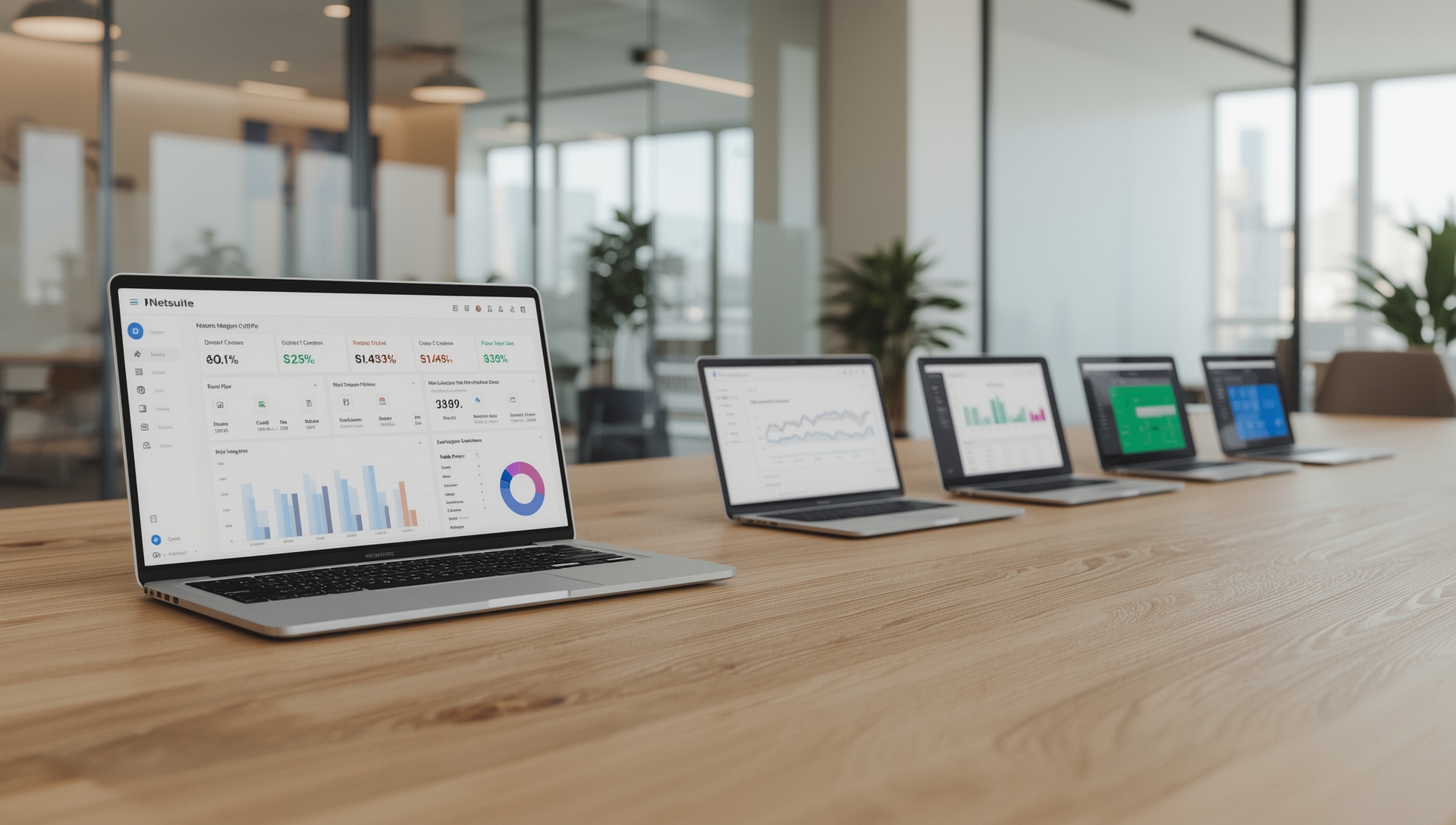
2026 will mark a turning point for many companies. The pressure to operate with more speed, more intelligence, and more control is forcing organizations to reassess whether their current technology truly allows them to compete.
Modernizing the ERP is no longer a technical project: today, it is a strategic element that determines whether the operation moves forward, stalls, or falls behind.
The ERP that worked well a decade ago is no longer designed for the pace at which the market demands companies operate today. Those that understand this in time manage to grow in an organized way; those that don’t end up paying the price of inefficiency.
🌍 The market has already changed: operations need to catch up
In recent years, companies have felt complexity increase at every level. The supply chain has become more volatile; customers expect immediate responses; internal teams need more precise information; and competitors operate with more modern tools.
Today, every decision depends on real-time information. Every area affects the next. Every delay costs money. Every mistake multiplies. Operating with a slow, fragmented, or outdated ERP is like operating blindfolded.
The market moves fast, but an old ERP moves slowly and that gap turns into invisible losses that hold back growth.
⚙️ When an ERP stops being support and becomes an obstacle
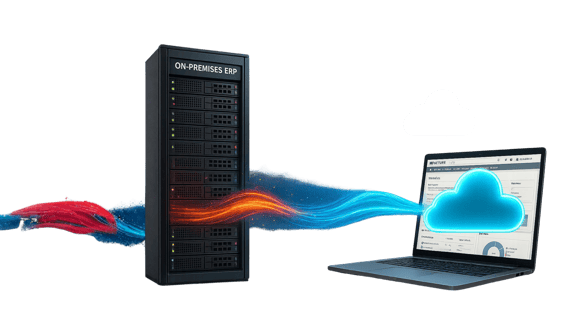
Systems age silently. They don’t break from one day to the next, but they begin to generate friction: financial closings take longer; reconciliation depends on spreadsheets; teams work with data that doesn’t match; reports arrive late; inventory loses accuracy.
When that happens, the problem is no longer the ERP itself, it’s its impact on the entire operation. Companies that grow while using outdated systems end up relying on manual processes, duplicated work, and decisions made by intuition rather than clear information.
The clearest indicator that an ERP has become obsolete is simple: the company keeps growing, but the system doesn’t.
🔄 Technology has advanced… and companies must advance with it
Artificial intelligence, advanced automation, predictive analytics, and cloud operations are no longer distant concepts. Today, they are the foundation of the most efficient and competitive companies in the market.
Planning is no longer done manually: it’s automated.
Demand is no longer estimated:it’s predicted.
Processes no longer depend on key individuals: they are orchestrated with AI.
Information no longer lags: it flows in real time.
Continuing to operate with an ERP that cannot integrate these capabilities means staying tied to an operating model from the past.
🧩 Modernizing is not changing technology; it’s changing how your company operates
Updating an ERP is often seen as a technical challenge, but its impact is fundamentally business-driven. A company that adopts a modern ERP regains control, order, and visibility. Processes become more consistent, teams work in alignment, information becomes reliable, and decision-making improves immediately.
It’s a change that reduces friction, improves internal communication, eliminates duplication, and strengthens scalability. In short: an organized company grows better.
☁️ What companies discover when they migrate to a cloud ERP
The most common change when migrating to cloud ERP isn’t technical — it’s cultural. Operations begin to run more smoothly, departments access the same information, and teams stop working “blindly.”
The cloud eliminates maintenance burdens, accelerates information availability, and allows processes to be adapted without stopping operations. The company stops playing catch-up and starts operating with precision.
Modernization doesn’t just improve the system. It improves how the entire organization works.
⚔️ ERP Comparison 2026: not all are built for expanding companies
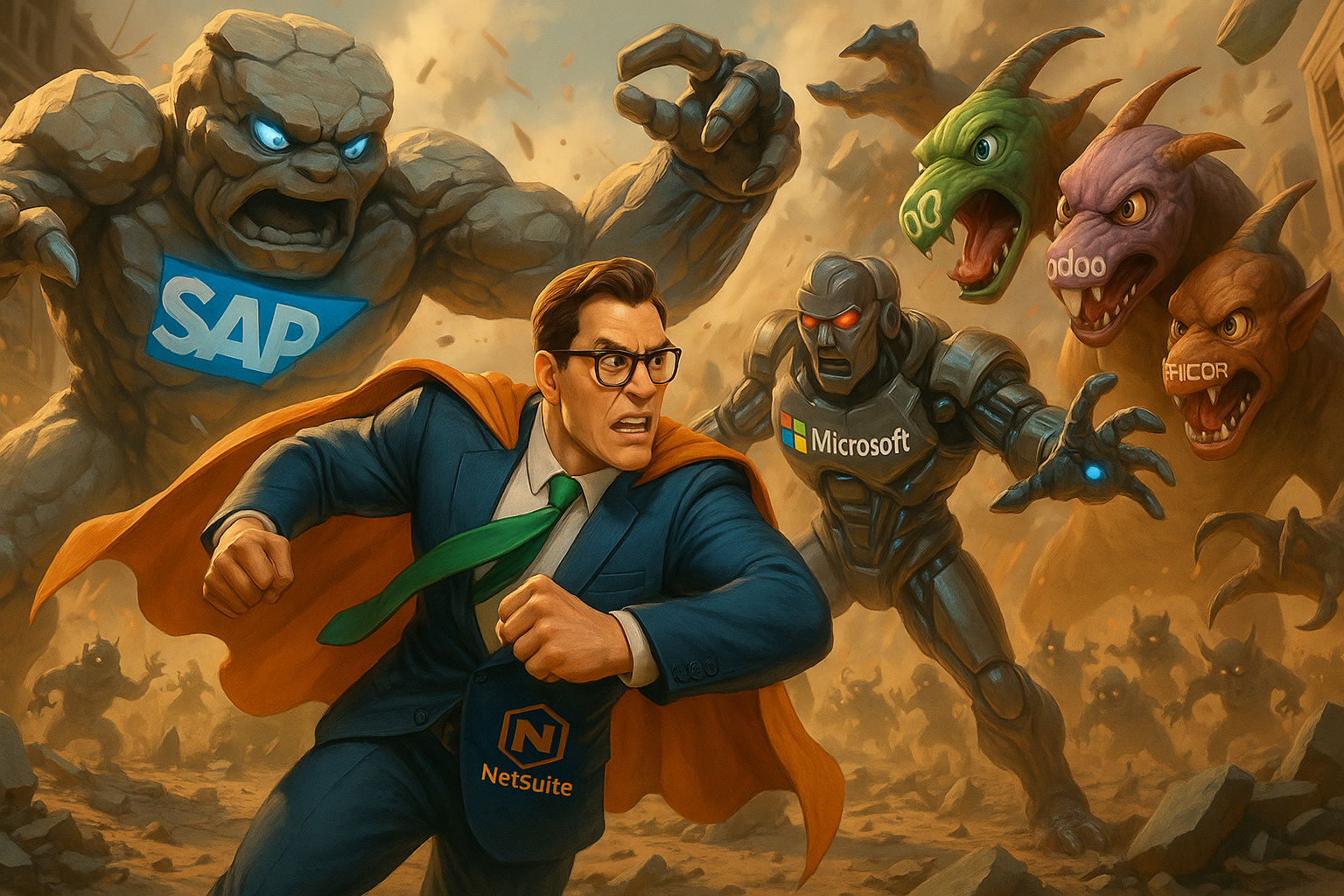
An honest evaluation of ERPs reveals clear differences. Some platforms are too complex for companies seeking agility; others depend heavily on external integrations; others work only if the company fits perfectly within their niche.
SAP remains a giant, but its implementations and costs make it unfeasible for organizations that need speed. Microsoft Dynamics offers flexibility, but its dependence on add-ons ends up fragmenting operations. Infor, IFS, and Epicor stand out in specific industries, but lose strength if the company diversifies or grows internationally. Oracle Fusion is extremely robust, but its complexity positions it for global corporations, not for mid-sized companies that are expanding.
After comparing, many organizations discover the inevitable: most ERPs are not designed to support the real, practical, and accelerated growth seen in LATAM.
If you want a clearer, more direct comparison based on real scenarios, check out our full ERP vs. NetSuite analysis. It’s the fastest way to see which platform truly drives growing companies.
👉 Explore full ERP vs. NetSuite comparisons
💡 Why NetSuite is the ideal ERP for 2026
NetSuite is a platform built for companies that are on the move: organizations expanding operations, entering new markets, diversifying lines of business, or growing at double-digit rates. Its main strength is not only technological but strategic: NetSuite keeps operations simple even when the business becomes complex.
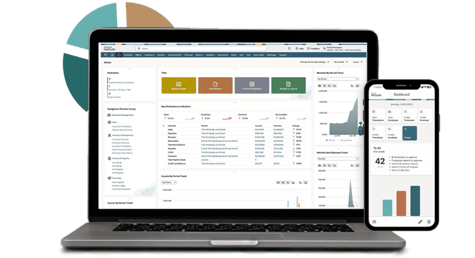
Its cloud-native model eliminates servers, versions, and maintenance. Its structure unifies finance, inventory, purchasing, sales, logistics, and planning in a single system, creating complete clarity. And unlike other ERPs, NetSuite grows without requiring reimplementations or endless projects.
In addition, its evolution in 2026 is especially relevant. It now incorporates artificial intelligence tools such as Ask Oracle, which allows you to query data, generate reports, and execute actions through natural language, and NetSuite Next, which drives more autonomous and predictable processes.
NetSuite also offers advanced analytics with NSAW, an integrated data warehouse that allows you to visualize complete business information in executive dashboards. And for companies that require solid financial planning, the integration with Oracle EPM provides consolidations, simulations, advanced budgeting, and predictive analysis.
The platform is lightweight when it needs to be, powerful when it must be, and flexible when the company requires it.
That’s why NetSuite doesn’t just keep up with the market: it anticipates it.
📈 Success story: Incode, a unicorn that scaled its global operation with NetSuite + Efficientix
Incode went from startup to unicorn in just a few years, but its growth brought complexity: multiple entities, global operations, fragmented processes, and a system that could no longer support the speed of the business.
With NetSuite and Efficientix, it consolidated its global finances, automated critical processes, improved reconciliations, unified information, and drastically reduced closing times. The company gained visibility, control, and the ability to scale without friction.
This case demonstrates a common pattern: when the platform is right and the partner understands the operation, processes stop being an obstacle… and become an advantage.
Discover the full story behind Incode’s transformation.
👉 View the Incode success story
👉 View the Incode success story on YouTube
🧭 Efficientix: the right partner makes all the difference
Modernizing the ERP with NetSuite is not about installing software; it’s about transforming how the company operates. Efficientix understands processes, industry, real-world operations, and Latin American complexity.
We design implementations that reduce friction, increase clarity, and generate value from day one. A company with NetSuite works better; a company with NetSuite + Efficientix works intelligently.
The result: a modern, profitable company ready to scale
Companies that modernize their ERP with NetSuite experience clearer operations, faster decision-making, less internal friction, and greater efficiency. Information becomes a strategic asset, not a headache.
It’s the difference between operating with effort… and operating with intelligence.
🎯 The next stage of your operation begins today
With Oracle NetSuite + Efficientix, modernizing your ERP stops being a risk and becomes the most strategic decision for 2026.
👉 Schedule a private demo
👉 Request your ERP assessment
👉 Build your modernization roadmap
When technology drives, growth becomes inevitable.
And this is the year to make it happen.

From Junk Excel to Healthy Growth: The Case of Don’t Worry and NetSuite

Unified operation and total control: Tecnosinergia + NetSuite
