
By Rogelio Gallegos on Dec 29, 2025, 2:28:52 PM
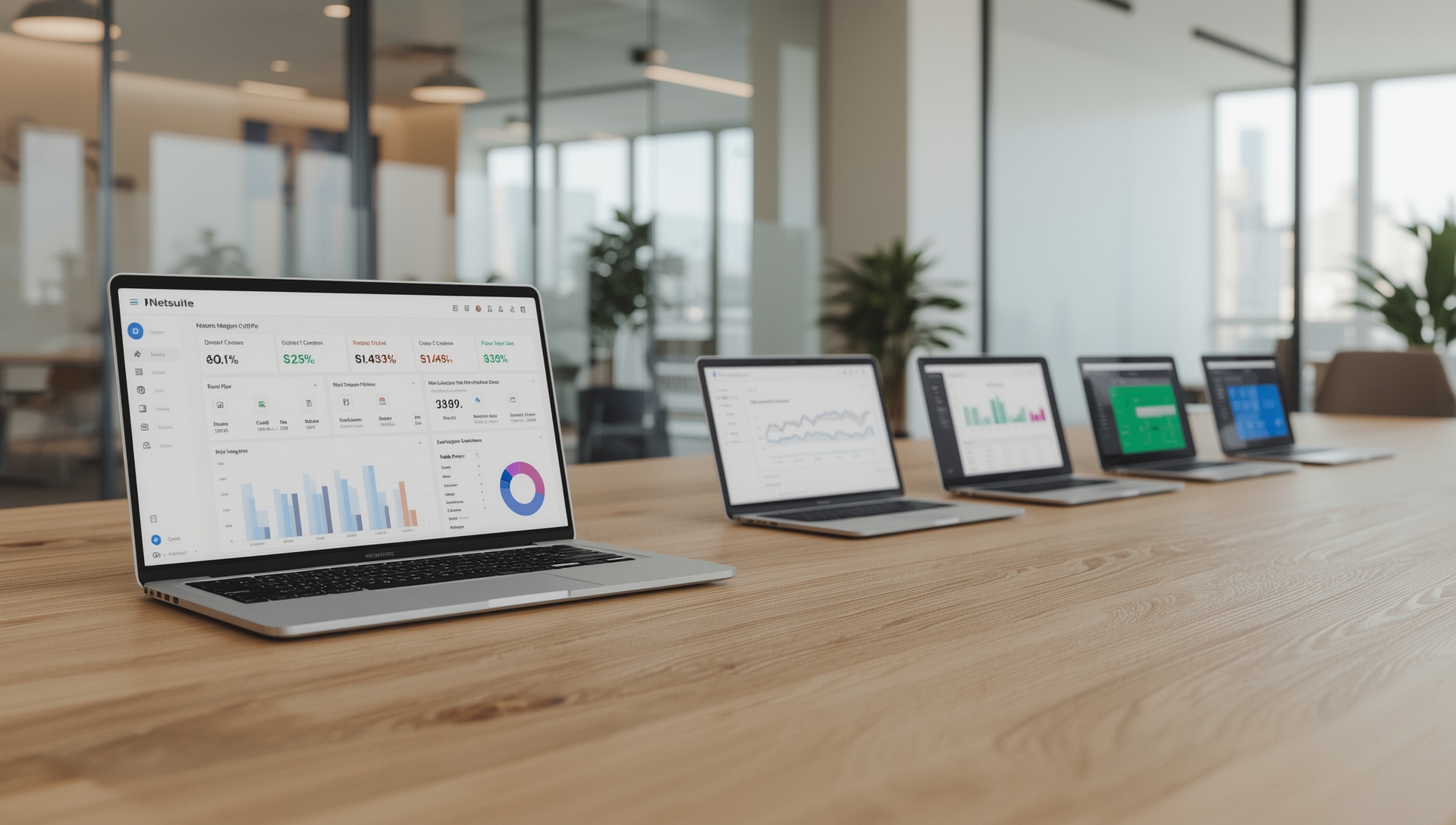
In 2026, changing your ERP is no longer just about "updating software": it is a strategic decision on how you will sustain financial control and ensure a scalable operation in a market that demands speed and total traceability.
In this blog, we break down the ERP landscape for 2026, what you must evaluate before making the leap to the cloud, and the key questions you need to bring to your committee before choosing a platform and an implementation partner.
What changes in 2026? Real-time operation is no longer a luxury
In 2026, the challenge isn't just being "more digital." It’s being more interconnected and less tolerant of delay. The modern operation no longer functions as isolated departments passing the baton once a day; it operates as a living chain where a purchase immediately impacts inventory, commits deliveries, triggers billing, and moves the needle on cash flow.
When data arrives late—or arrives differently depending on who you ask—the business doesn't just move slowly: it decides based on assumptions.
Operating in real-time is not simply about having pretty dashboards . It means that key business information (sales, inventory, procurement, accounting, collections) updates with reliable immediacy and, above all, that there is traceability: the ability to mathematically explain where every number came from and who changed it.
Warning signs: How to tell if your company runs on "expired data
We see this often in growing companies when the current ERP or management system is no longer enough:
-
“Today’s reports” depend on manual cutoffs or someone who has to “build them.”
-
Sales, operations, and finance carry different versions of reality (“my number vs. your number”).
-
The monthly close stretches due to repetitive reconciliations and reclassifications.
-
Integrations work—until they don’t (files, macros, manual uploads).
-
Inventory requires frequent adjustments because the system doesn’t reflect the real flow.
Before you talk about “migration,” it’s critical to distinguish whether the root cause is the technology platform or internal processes. If you don’t diagnose the cause first, you’ll simply move the chaos to the cloud.
When an ERP stops being support and becomes a bottleneck
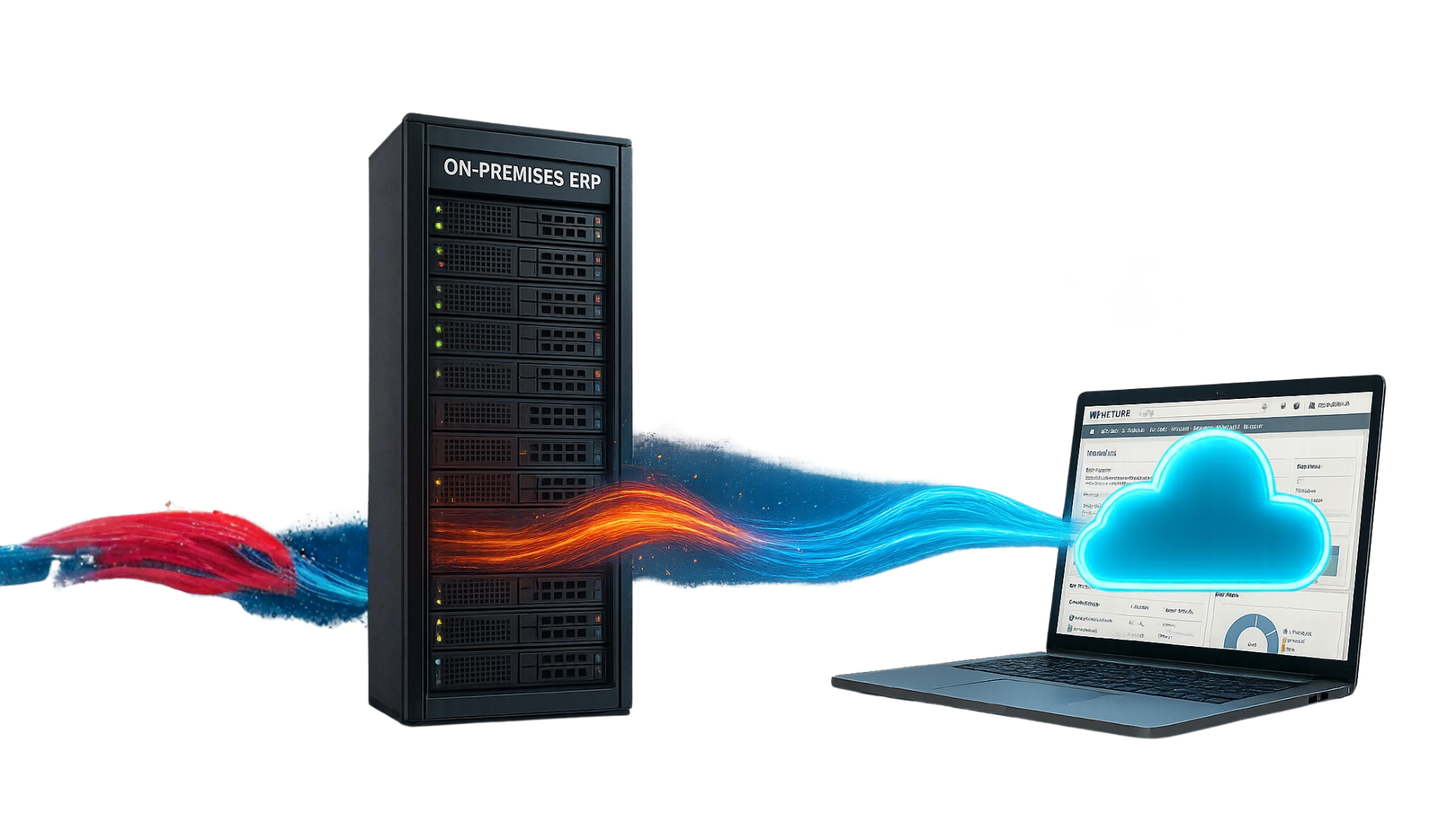
An ERP doesn't break down overnight. It becomes risky in a more subtle way: every month it demands more human effort to sustain the same operation. That extra work hides in the company's "hidden factory": infinite Excel sheets, email chains to validate data, informal approvals via chat, and reconciliations that no one brags about, but everyone suffers from.
An ERP becomes a bottleneck when it doesn’t reduce friction but creates it: to close, report, or audit, you have to compensate for system limitations with manual processes, patches, and interpretation. We see it clearly when the “truth” lives outside the ERP and the team spends more time reconciling than operating.
Signs your ERP is reaching the end of its lifecycle
These are typical indicators that your system is no longer keeping up with the pace of the business:
-
Stretched accounting close due to recurring reclassifications and manual reconciliations.
-
"Outside" bank reconciliation dependent on exporting, cleaning, and re-importing data.
-
Low reliability inventory: Frequent adjustments, differences between warehouse and system, inconsistent costs.
-
Glass integrations: Every small change in a satellite system breaks the connection with the ERP; "workarounds" become normalized.
-
Weak controls: If the audit trail is poor, the risk increases even if "everything seems to work" on the surface.
The clearest indicator of obsolescence isn't the software's age; it's the friction. If every new business initiative forces you to create an external patch, your ERP has stopped being a platform and has become operational debt.
Technology has changed: AI as an operational standard, not a trend
In 2026, talking about Artificial Intelligence (AI) is no longer discussing "future trends." It is talking about a measurable operational advantage. But there is a truth that few providers will tell you: AI does not fix bad data or broken processes.
The equation is simple and brutal: If your operation lives in silos and disconnection, AI will only serve to automate chaos… faster.
AI applied to serious business isn't just a friendly chatbot or an "agent." It is the use of models and automation to assist decisions, execute repetitive tasks, and operate within controlled flows: with traceability, clear business rules, and auditable evidence.
Where does AI deliver the most value in a company?
In growing companies, AI isn’t here to write emails. It’s here to reduce financial and operational friction by targeting specific pain points:
-
Reconciliation and matching: spotting matches and exceptions (banks, payments, invoices) so the team reviews only what’s anomalous.
-
Variance detection: alerts when something deviates from the pattern (margins, discounts, costs, inventory, accounts receivable).
-
Operational forecasting: supporting demand or cash projections with scenarios (not as absolute truth, but as a signal).
-
Process orchestration: automating approvals, exception routing, and recurring tasks so execution doesn’t depend on “key people.”
If your current systems can’t support basics like reliable integrations, a single data foundation, and clear business rules, trying to layer AI on top won’t just be expensive—it will be fragile. It’s like putting a Formula 1 engine on a go-kart chassis.
That’s why, before “migrating for AI,” you need a sober decision framework: what foundation must exist first so technology reduces risk instead of multiplying it?
ERP Migration in 2026: From "Reporting" to Operational Control
In 2026, ERP modernization isn’t judged by how modern the interface looks, but by the operational certainty it establishes across the organization. The shift stops being cosmetic and becomes structural: its purpose is to standardize processes and enforce strict data governance.
Technically, this requires rethinking integrations with strategic intent: fewer patches, more traceability, and a single version of the truth. With that foundation, business intelligence stops being the manual act of “building reports” and becomes continuous visibility. You move from chasing data to see what happened yesterday, to managing exceptions and making decisions with timely information, freeing yourself from the operational debt of the past.
Tangible outcomes of a governance-led migration
Some benefits show up quickly; others strengthen with adoption:
-
Less maintenance burden and more predictable updates (less “operational debt”).
-
More available information with lower latency, if integrations and data design are done correctly.
-
The ability to adapt without stopping the business, because changes are managed through controls and environments—not improvisation.
-
Stronger internal control: permissions, approvals, logs, and audit-ready evidence.
With this context, the next step is not to discuss "the best platform", but how to make the decision without bias: what criteria to use, what risks to accept, and what tradeoffs to avoid before committing investment and operation.

ERP Comparison 2026: Not all are built for growing companies
In 2026, comparing ERPs by modules—or choosing based on brand alone—often leads to a costly decision. What truly matters is your growth reality: how many entities you will run, how many critical integrations you must sustain, the fiscal compliance requirements, and the level of traceability/auditability the business will demand.
When companies evaluate options, a pattern often appears:
-
Rigid Giants: Robust platforms for global corporations, but requiring implementation complexity and a Total Cost of Ownership (TCO) that suffocates growing companies.
-
Fragmented Flexible: Agile options that end up depending on a "Frankenstein" of add-ons and external connectors that never solve the information silo problem.
-
Limited Locals: Solutions that shine in a specific region or industry but break when the company tries to cross borders or diversify business lines.
In plain terms, the key question is: Will this ERP sustain traceability and control with a single source of truth—or will we need patches just to make it work the way we operate?
👉 Explore NetSuite comparisons vs. other ERPs
Why NetSuite is the standard for expanding companies
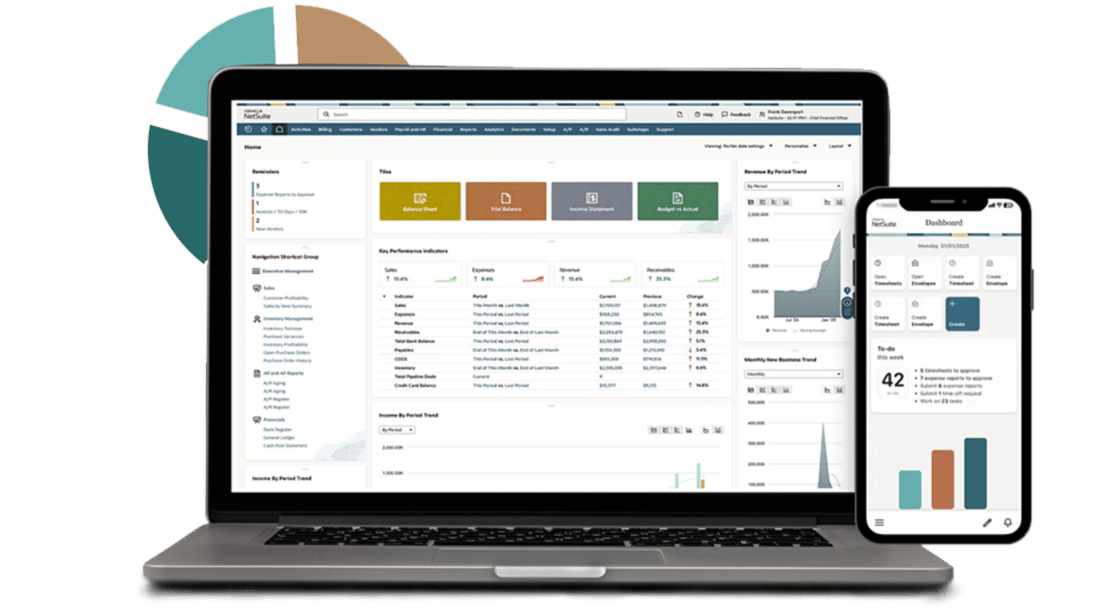
etSuite has become the logical choice for organizations entering new markets and increasing operational complexity because it enables scale without losing control. Its value is not “adding another software layer,” but unifying finance, inventory, and operations on a single database—built cloud-native from the start.
For 2026, the proposition strengthens with NetSuite Next which support repetitive execution while keeping humans in control. Tools like NetSuite Analytics Warehouse and Enterprise Performance Management (EPM) also elevate financial planning and scenario modeling, reducing dependence on external spreadsheets.
Put simply: this combination only pays off if the project is designed with method. Without diagnosis, data governance, and standardized processes, the cloud and AI just move chaos to a different place.
Efficientix: a method to turn software into operational control
Successful migrations share a secret: they don’t depend on the software alone—they depend on process engineering. This is where Efficientix stops being a vendor and becomes your infrastructure partner: we apply a proprietary methodology that prioritizes data governance, internal controls, and fiscal risk mitigation (including compliance requirements in Mexico and LATAM) before the system goes live.
A clear example is Incode,
a global digital identity company. They faced rapid growth with fragmented systems that made financial consolidation difficult.
-
Challenge: Global operation with duplicated information and late reporting.
-
Solution: NetSuite ERP implementation orchestrated by Efficientix.
-
Results: [Confirm with source] 50% reduction in close time and [Confirm with source] 30% improvement in global reporting accuracy, enabling a standardized, audit-ready operation.
Conclusion: modernizing ERP with NetSuite is not about installing software—it’s about transforming how the business operates.
Book your viability diagnostic
Don’t choose an ERP for 2026 based on sales promises. Book an initial diagnostic session to map your growth scenario, uncover hidden risks, and define decision criteria that protect your investment.

Dulces Gaby success story: order and growth with Oracle NetSuite

Why integrate Point of Sale, E-Commerce, and ERP?