

NetSuite WMS: real warehouse control
By Christian Salas on May 15, 2026, 3:21:56 PM
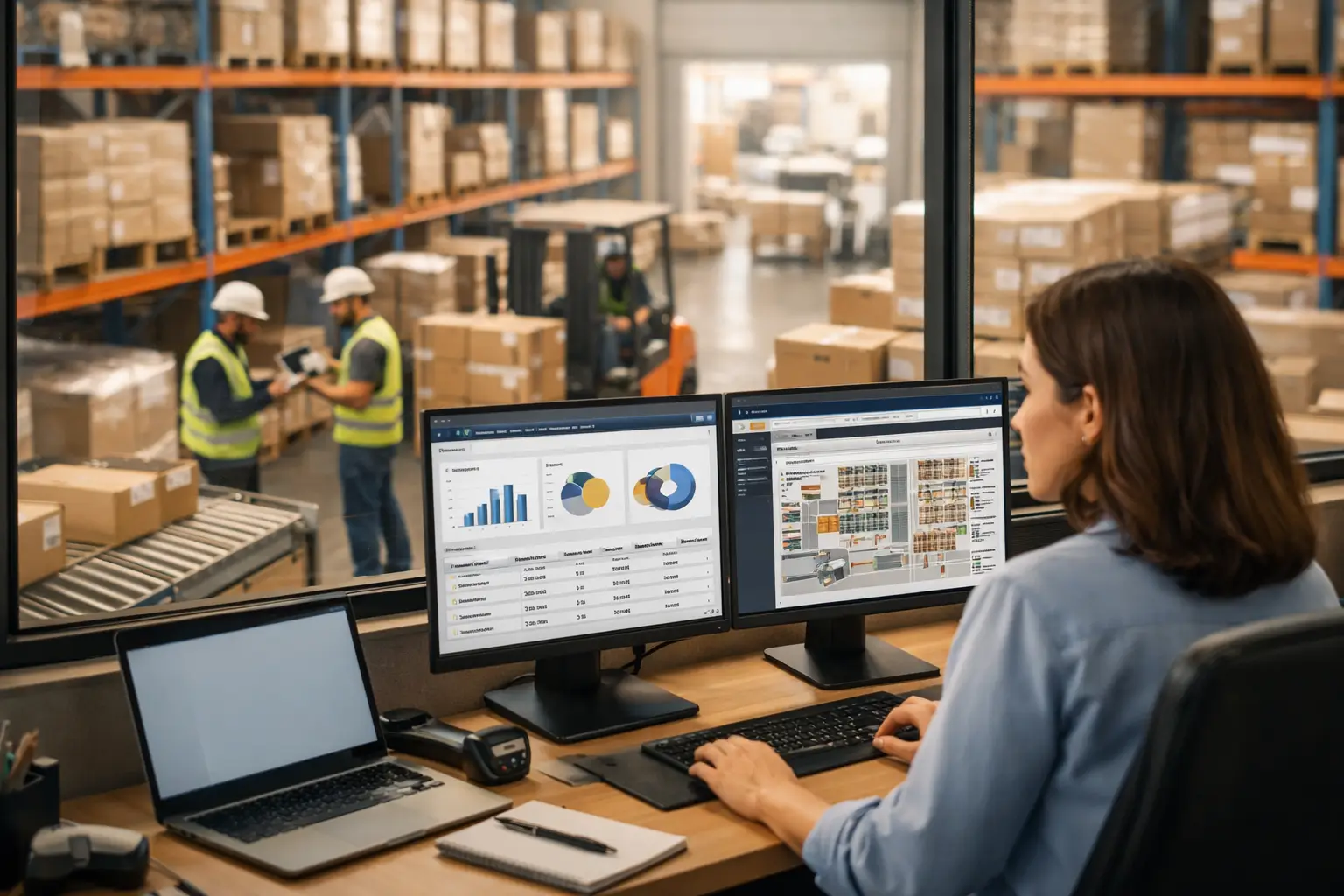
A warehouse does not get messy all at once. It starts with small differences between the system and the floor, rushed picked orders, late captured receipts, and a question that gets repeated too much: "How much inventory do we actually have?" That is where NetSuite WMS stops being an interesting feature and becomes an operational decision.
For expanding distribution, manufacturing, retail, and e-commerce companies, the problem is usually not just moving boxes. The real challenge is coordinating receiving, locations, picking, counting, replenishment, and shipping without relying on Excel, paper, or tribal knowledge. When the ERP already lives in NetSuite, separating warehouse operations into another tool can add friction, duplication, and delays. That is why NetSuite WMS usually enters the conversation when the business needs real-time visibility and operational discipline without inflating technological complexity.
What NetSuite WMS is and what it solves
NetSuite WMS is the NetSuite warehouse management module designed to execute warehouse processes directly on the same platform where inventory, orders, purchasing, sales, and finance live. In practice, this means that the operator works with guided tasks, scanning, and operational rules connected to the ERP, not with subsequent captures that someone regularizes at the end of the day.
Its value is not in "digitalizing the warehouse" as a general idea. It is in reducing three very specific frictions: data entry errors, dead times between operation and system, and decisions made with outdated data. If a receipt is confirmed at the right time, if picking follows a defined logic by priority and location, and if cycle counts adjust differences before they escalate, the operation gains control and the finance department gains confidence in the inventory.
Of course, not all companies need the same level of WMS. There are low-volume operations with few locations and stable processes that can work well with basic inventory capabilities. The turning point appears when SKUs grow, picking errors increase, warehouses multiply, or customer service begins to suffer from unfulfilled delivery promises.
Where NetSuite WMS generates the most value
The greatest impact of NetSuite WMS is seen when the warehouse can no longer operate by memory. In wholesale distribution, it helps organize receiving, putaway, replenishment, and picking with consistent rules. In manufacturing, it improves the control of raw materials, locations, and internal movements that feed production. In retail and e-commerce, it provides speed to fulfill orders with fewer errors and more traceability.
It also gains traction in companies with multi-node operations. When there are several warehouses, branches, or distribution centers, process standardization weighs as much as technology. A WMS within the same NetSuite ecosystem makes it easier for purchasing, inventory, sales, and shipping to share a single version of the truth.
For management teams, that changes the conversation. The COO stops chasing isolated incidents and starts managing productivity by process. The CFO stops living with doubts about recurring inventory adjustments. And IT reduces the operational cost of sustaining unnecessary integrations between systems that evolve at different paces.
Key NetSuite WMS processes on a day-to-day basis
Receiving and putaway with clear rules
One of the most costly errors in the warehouse occurs at the beginning: receiving well physically but recording poorly or late in the system. NetSuite WMS allows guiding receipts and assigning locations according to predefined rules. This reduces improvised decisions on the floor and improves actual availability for picking or production.
It is not just about efficiency. It is also about traceability. When every movement is recorded in context, investigating differences stops being a manual reconstruction exercise.
Picking, packing, and shipping with less rework
In many operations, the bottleneck is not selling but fulfilling without errors. NetSuite WMS helps organize picking tasks with operational logic, whether by zone, priority, or order type. That reduces unnecessary travel and lowers the risk of incomplete or wrong shipments.
The benefit is direct: fewer returns, fewer clarifications with customers, and less hidden cost due to rework. In sectors with pressured margins, that improvement weighs more than it appears.
Cycle counts and inventory control
Waiting for the annual physical inventory to discover differences is no longer viable in companies with accelerated growth. NetSuite WMS facilitates cycle counts to correct deviations continuously. This improves the reliability of available inventory and reduces surprises at financial close.
Here we must be clear: the system helps, but it does not replace operational discipline. If locations, movement policies, and responsibilities are not well defined, no WMS corrects a weak process on its own.
What to evaluate before implementing NetSuite WMS
The right question is not whether the module has many features. The question is whether your processes are ready to be executed with consistent rules. Implementing NetSuite WMS without reviewing current operations usually transfers the mess to the system, just now with scanners.
First, you have to understand the actual warehouse flow. How you receive, how you assign locations, how you pick, when you replenish, how you manage exceptions, and what metrics already show friction today. Then comes the design. What rules should be configured, what master data needs cleaning, what devices you will use, and how you will train the team to operate with discipline from go-live.
The operational localization of the business also matters. In Mexico and LATAM, many companies do not just need warehouse efficiency. They need the operation to dialogue correctly with valued inventory, billing, tax compliance, and regional financial reporting. There, the advantage of working on NetSuite is that the warehouse does not live isolated from the rest of the business.
NetSuite WMS does not replace operational strategy
It should be said bluntly. A WMS does not fix a poor layout, bad SKU coding, or ambiguous inventory policies on its own. It also does not replace training, supervision, or data governance. It does accelerate and make real problems visible, and that visibility is valuable because it allows correcting before the cost grows.
That is why successful implementations do not just focus on activating features. They focus on defining executable processes, adoption indicators, and a realistic deployment sequence. Sometimes it is best to start with receiving, picking, and counting. In other operations, the highest return is in reorganizing internal replenishment or location rules. It depends on the level of maturity and the expected impact.
How to measure if NetSuite WMS is working
The best way to evaluate NetSuite WMS is not by the number of active screens, but by measurable changes in operation. Normally we look for improvements in inventory accuracy, productivity per operator, picking times, error rates in shipments, and traceability capacity by lot, serial, or location when applicable.
There are also financial and service indicators. Fewer inventory adjustments, fewer committed sales without real stock, fewer logistical emergencies, and better delivery promise fulfillment. When those indicators move, the WMS stops being an IT project and becomes a profitability lever.
In our experience, the highest return appears when the warehouse, finance, and operations management share the same goal: reducing friction, not just changing systems. That is where technology truly accelerates results.
When it makes sense to take the step
If today your operation depends on manual entries, if the system inventory does not match the floor, if growth already pressures accuracy and speed, or if you are consolidating processes on NetSuite, evaluating NetSuite WMS makes sense. Not because it is trendy, but because the cost of continuing to operate with low visibility is usually higher than what the reports reflect.
For mid-sized and expanding companies, the right decision rarely involves buying more software. It involves building an operation that can scale with control. That is where a partner with NetSuite experience, regional knowledge, and implementation methodology makes a difference. Efficientix works right at that point: translating operational complexity into an executable, measurable design aligned with the real pace of the business.
If your warehouse has already grown faster than your processes, you probably do not need more tolerance for error. You need an operation that records well, executes better, and allows you to decide with data that actually reflects what is happening on the floor.
You May Also Like
These Related Stories

NetSuite AI: where it truly generates real value
ERP for wholesale companies: what to demand